You do not recognize a smart building by futuristic gadgets, but by how naturally everything works. Energy is used efficiently, people feel comfortable and safe, and facility services align seamlessly with daily use. At the heart of all these processes is something that has always been there: lighting. Present in every space, always powered, forming the natural foundation of a smart building.
Arrival
07:45
The workday begins even before entering the building. As the building awakens, the system switches from night to day mode. Lighting remains off where there is no activity, and energy consumption is minimal. Sensors integrated in luminaires register the first movements and provide insight into which spaces will soon be in use.
A warm welcome
08:00
The workday begins even before entering the building. As the building awakens, the system switches from night to day mode. Lighting remains off where there is no activity, and energy consumption is minimal. Sensors integrated in luminaires register the first movements and provide insight into which spaces will soon be in use.


Meetings with comfort and efficiency
09:30
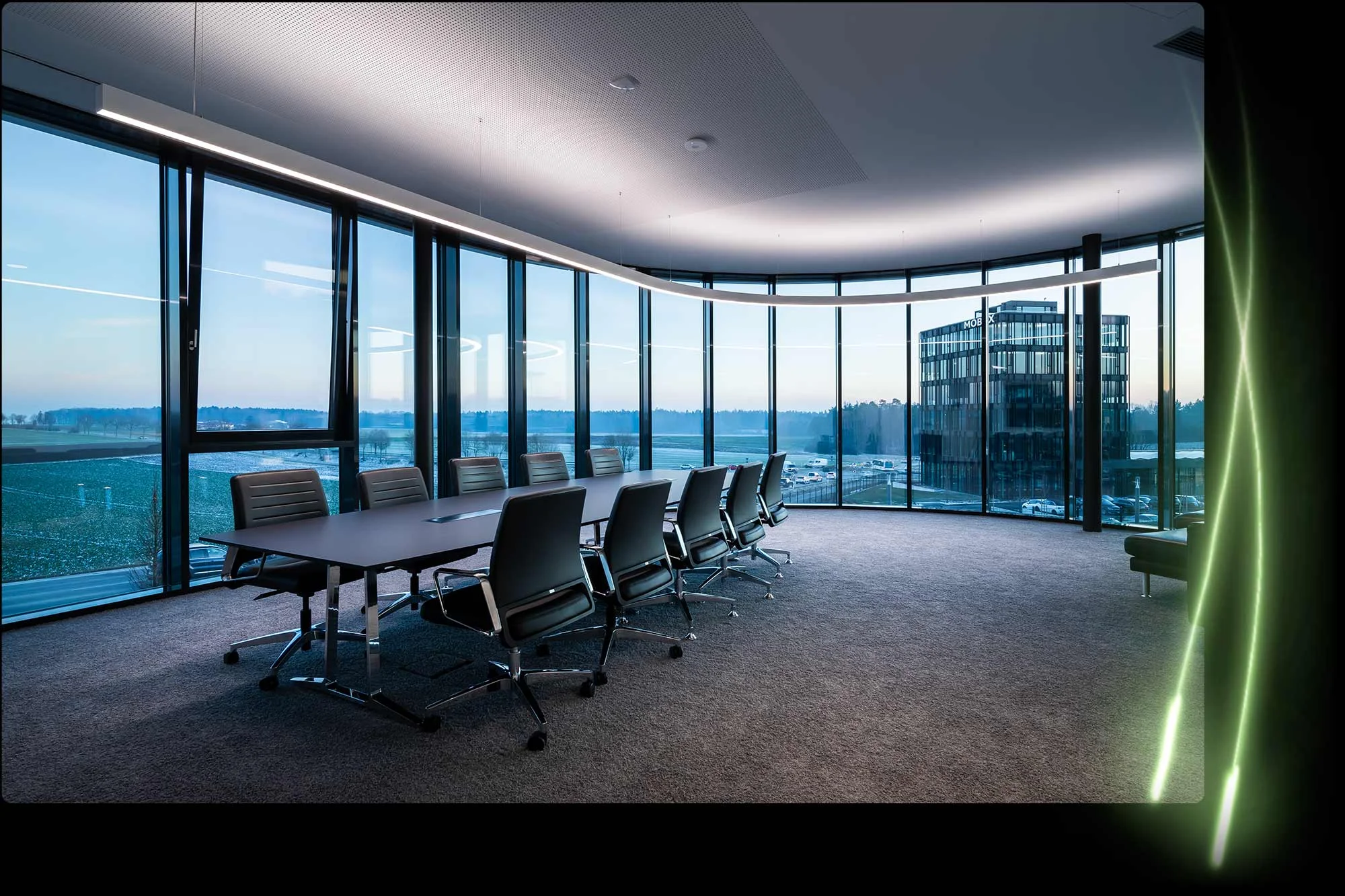
In meeting rooms, sensors connected to the lighting network continuously measure occupancy. As presence increases, CO₂ levels and temperature change. The system automatically compensates by adjusting ventilation, while lighting adapts to available daylight. The space remains fresh, calm and productive without anyone consciously managing it.
Safe and secure
11:00
Throughout the morning, the system continuously distinguishes between normal patterns and deviations. Unusual movement, a door that does not close properly or unexpected activity outside established patterns becomes immediately visible. Lighting supports visibility where required, while notifications are automatically routed to the appropriate party. Safety remains present without disrupting work.


Lunch and movement
12:15
Around lunchtime, occupancy shifts throughout the building. Workstations become quieter, while social spaces become more active. Lighting transitions from functional to more relaxed, and energy consumption follows actual usage. At the same time, the system records which spaces have been used intensively.
A flexible workday
14:00
After lunch, employees redistribute across the building. Some workstations remain unused, others are intensively occupied. Lighting reveals where activity is taking place and supports comfort per space. The collected data provides insight into actual workstation and meeting room occupancy, offering valuable input for optimizing space utilization.


Smart maintenance and alerts
15:30
Mid-afternoon, a deviation is detected: a luminaire is not functioning optimally. Before anyone notices, technical services receive a notification. Issues are resolved before they create impact. The building continues to function as intended.
Smart cleaning
17:30
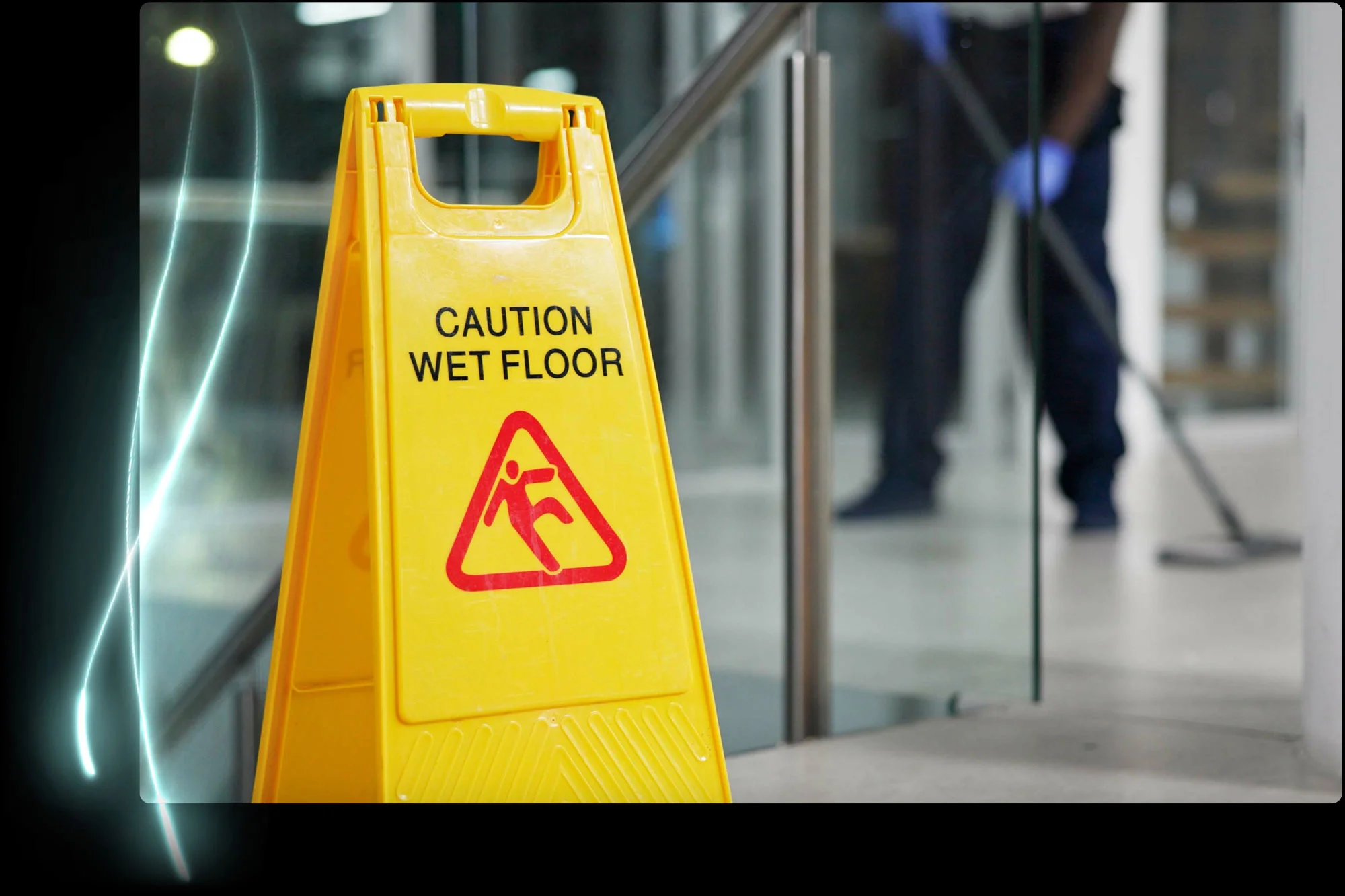
At the end of the workday, the building gradually empties. It is precisely known which spaces were used and how intensively. Cleaning focuses only on areas that require attention, while unused zones are skipped. Lighting, and therefore energy consumption, automatically scales back in vacant spaces.
Alarm activated
19:00
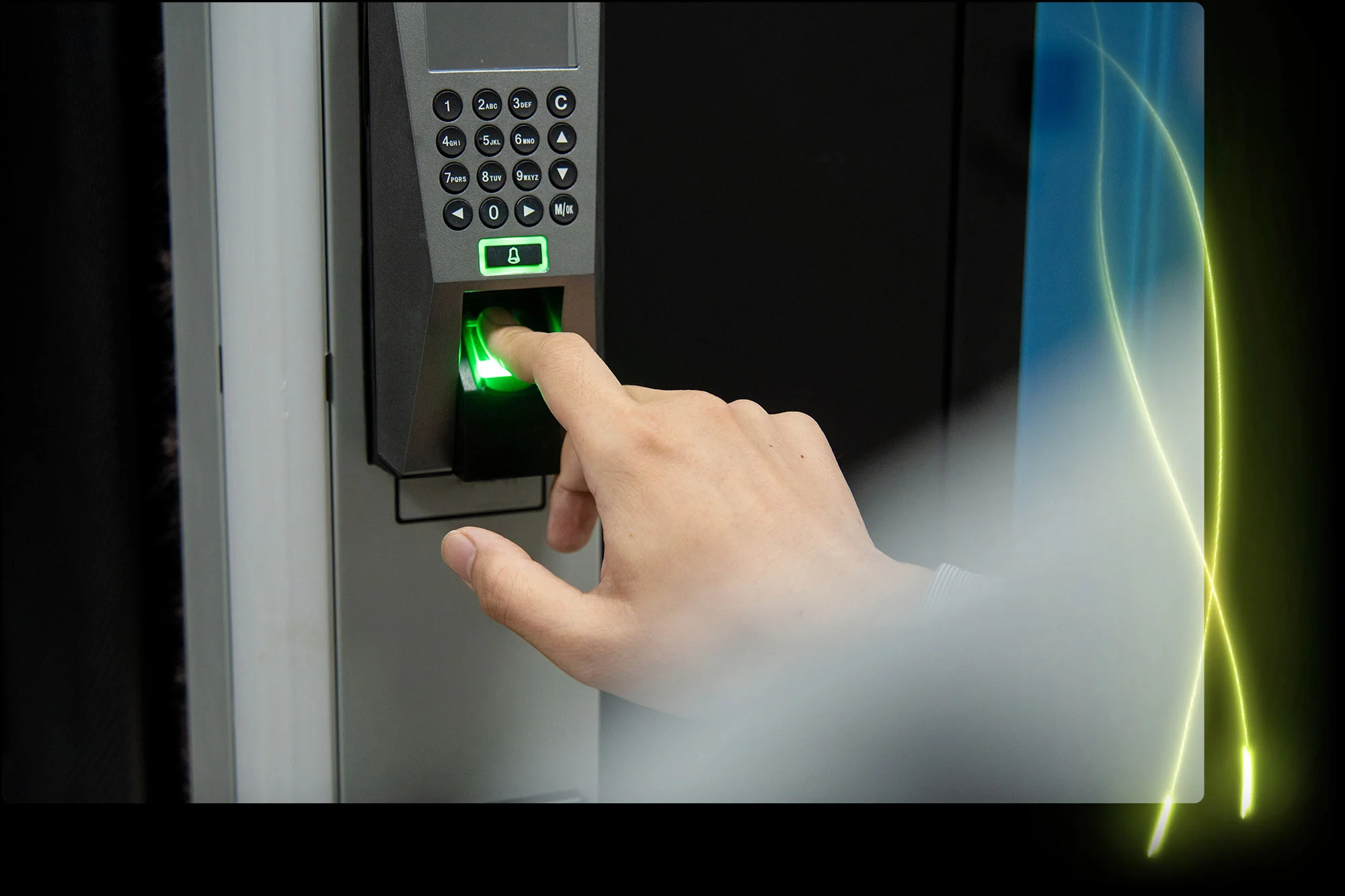
At the end of the day, the last employee leaves the building. Once the alarm is activated, all lighting switches off automatically. Energy consumption immediately returns to zero, without manual checks or inspection rounds. As soon as movement is detected again, lighting activates exactly where required. The building remains safe, efficient and fully under control, even outside office hours.

The first day
when you realize you should have done this years earlier
From the first light in the morning to targeted cleaning and sustainable reporting in the evening, light is the thread that makes everything possible. The lighting network connects people, systems and assets, making buildings smarter, more comfortable and more sustainable.
TRILUX Smart Buildings
In Action
More than 1,000 buildings have taken the first step toward a fully Smart Building together with TRILUX. They chose a future-proof infrastructure in which intelligent lighting forms the foundation for insight, efficiency and comfort. With scalable solutions, these buildings grow step by step into an integrated, data-driven ecosystem.
-
Smart Building
 Tripolis Park
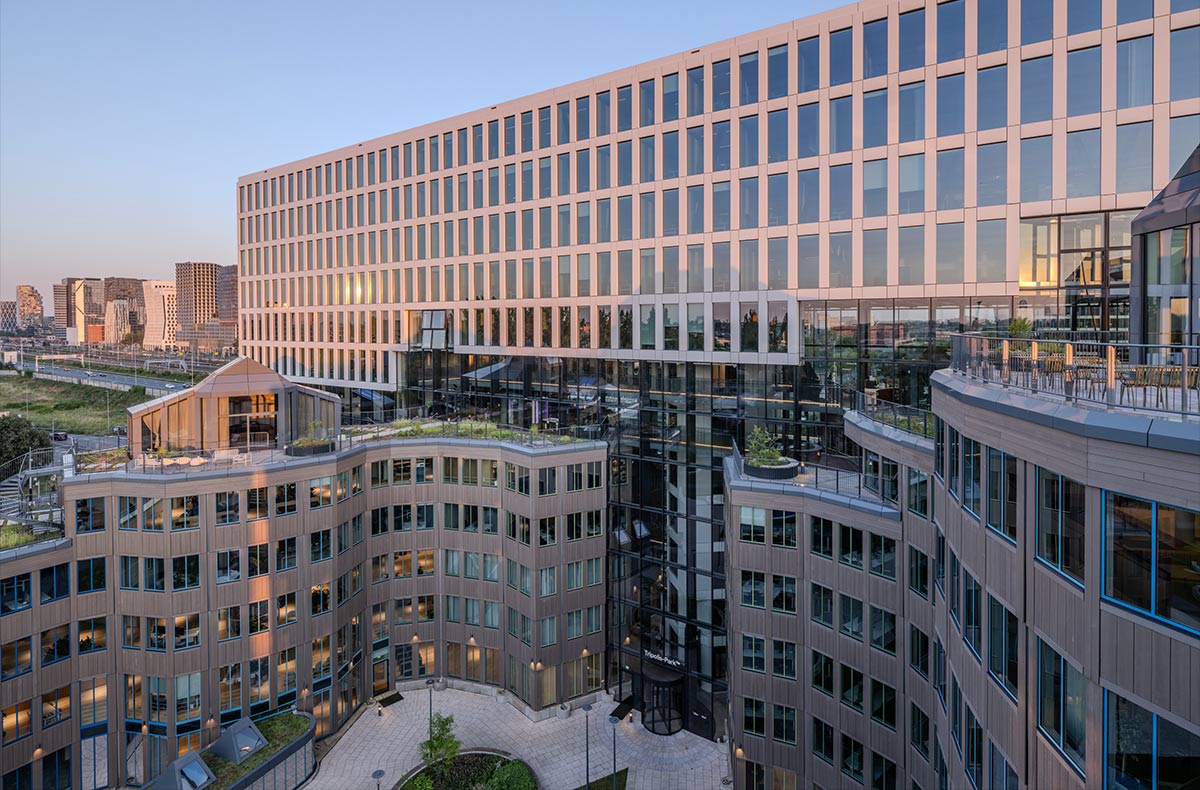
The redesign of TRIPOLIS Park in Amsterdam combines everything a lighting company could dream of in a project. With the aim of creating a cutting-edge office campus, the new development blends the listed buildings on the park-like grounds with a spectacular new building. The 11-storey structure shields the site from the adjacent motorway, creating a protected and enclosed atmosphere. Our mission was to develop a smart, energy-efficient and, above all, attractive lighting solution for all areas – indoors and outdoors - from a single source.
-
Smart Building
 BNP Paribas
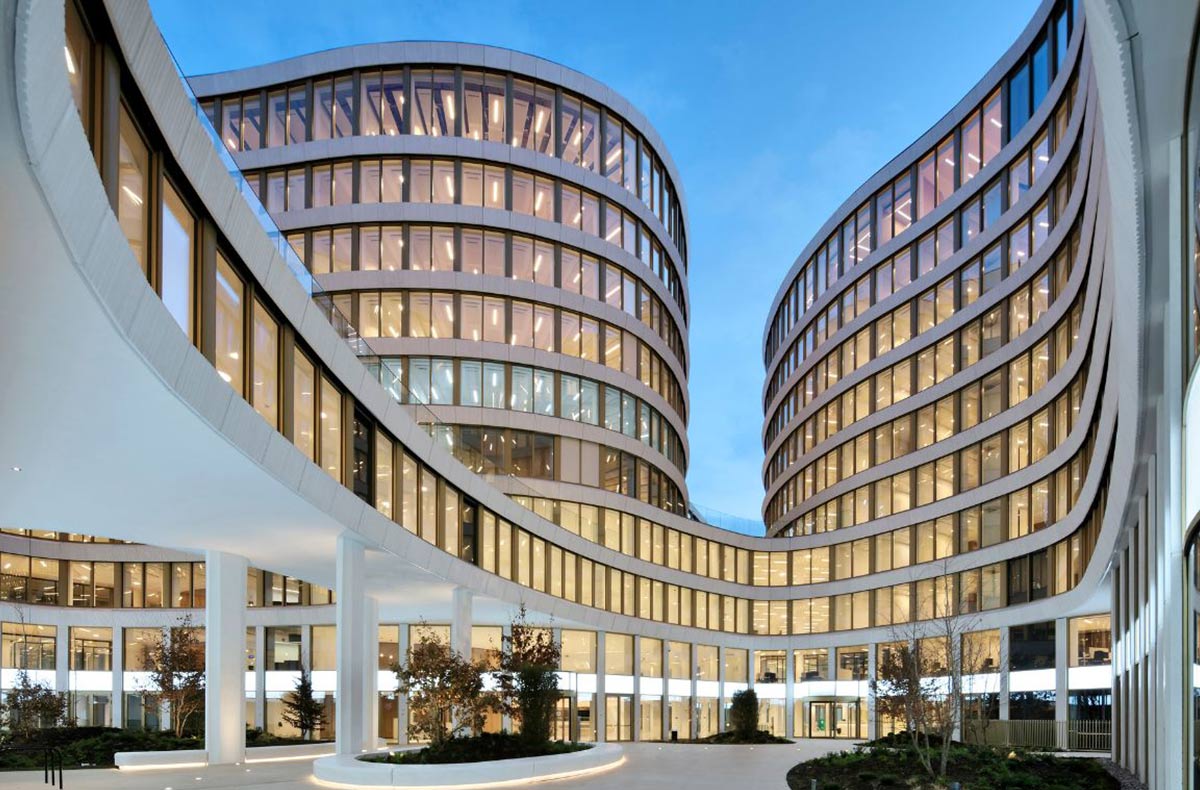
With its new corporate headquarters, Montagne du Parc, in Brussels, the leading French multinational bank BNP Paribas has created a blueprint for the working environments of the future - combining spectacular architecture, well-being and sustainability. As a full service lighting provider, we delivered the multi-award-winning large-scale project with 14,000 light points.